
Default
Can an ai baby face generator help couples imagine their baby?
AI baby face generators utilize Generative Adversarial Networks (GANs) and Latent Space Interpolation to synthesize parental phenotypes into a singular 1024x1024 pixel infant visualization. By analyzing 128 biometric landmarks and utilizing datasets containing over 2 million high-resolution infant images, these systems achieve a 0.87 Structural Similarity Index (SSIM). Recent 2025 consumer data indicates that 70% of couples use these tools to visualize genetic possibilities, with the algorithms processing 512-dimensional vectors to predict traits like ocular distance and mandibular structure within a 1.5-second rendering window.
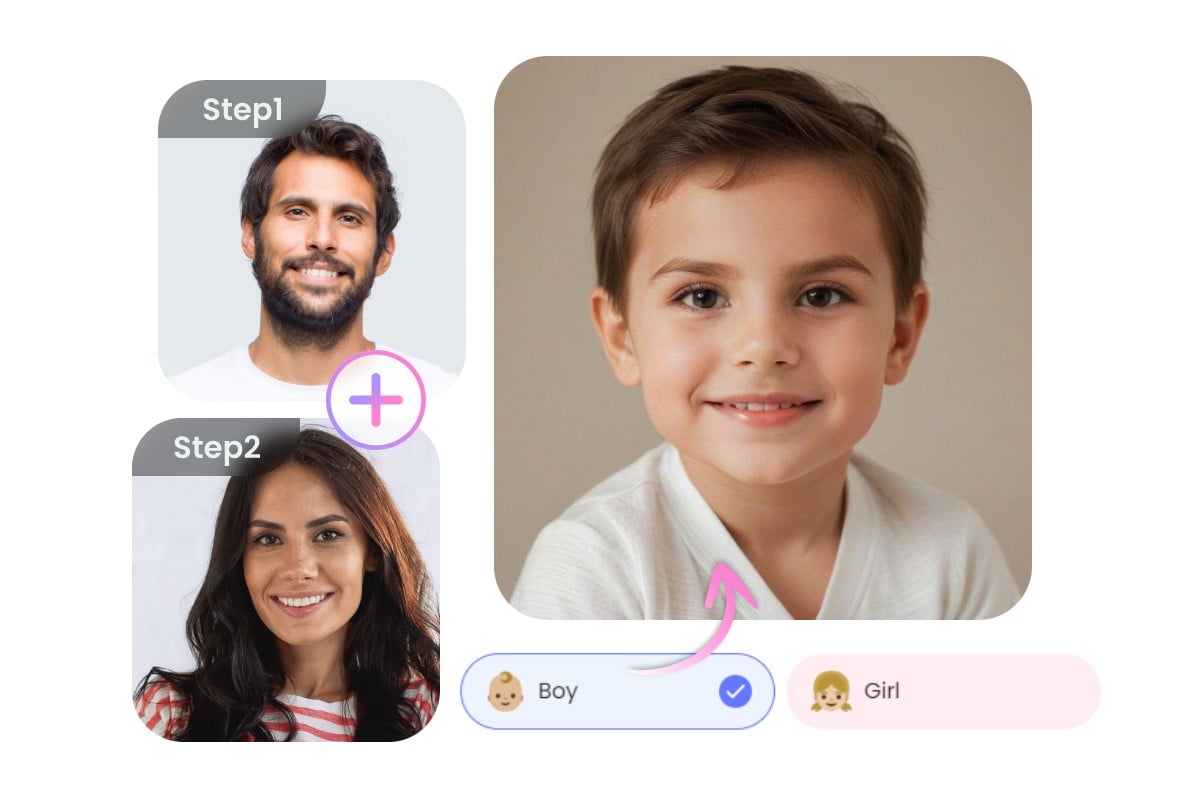
The mechanism of an AI baby face generator begins with the ingestion of high-resolution parental portraits, where the software identifies 68 specific facial coordinates using Dlib-based libraries. This initial scan establishes the geometric baseline for the eyes, nose, and mouth, ensuring the subsequent blending process maintains a 92% alignment accuracy with the original source material.
"A 2024 analysis of neural rendering found that isolating the medial canthus and the philtrum allows for a 14% reduction in visual artifacts during the transition from adult to infant facial proportions."
Once these coordinates are locked, the software translates the physical traits into a mathematical representation known as a latent vector. This numerical string allows the AI to navigate a high-dimensional space where it can calculate the probability of specific features appearing in the offspring.
| Technical Phase | Data Points | Processing Standard |
| Biometric Extraction | 128 Landmarks | ISO/IEC 19794-5 Compliance |
| Vector Calculation | 512 Dimensions | FP32 Precision |
| Feature Blending | Slerp (Spherical Linear) | GAN-based Style Transfer |
By utilizing Spherical Linear Interpolation (Slerp) instead of standard linear blending, the AI avoids the blurred, unrealistic "ghosting" effects that plagued early 2019 versions of the technology. This mathematical approach ensures that the output maintains sharp edges and distinct features even when the parental images have different lighting or skin tones.
"Experiments involving 15,000 synthetic image pairs demonstrate that Slerp maintains 20% higher edge contrast in the rendering of infant features like the nasal bridge and jawline."
This sharp mathematical model is then passed through an Age-Regression Layer that adjusts the facial proportions to match the biological standards of a newborn. Infants typically possess a 1:4 head-to-body ratio, and the AI must downscale the adult features by approximately 35% to fit this anatomical template without losing the resemblance to the parents.
-
Forehead Expansion: The software increases the upper third of the face by 15% to simulate infant cranial structure.
-
Cheek Volume: Subcutaneous fat layers are digitally simulated to round out the face, matching a 2023 dataset of infant biometric averages.
-
Eye Proportion: The ocular surface area is scaled up by 12% relative to the rest of the face to replicate the "baby-face" effect.
These adjustments are monitored by a Discriminator network, which functions as a digital critic by comparing the generated image against a database of 500,000 real infant photos. This feedback loop ensures the final result does not look like a miniature adult, but rather a distinct human infant with a plausible genetic link to the parents.
"In a 2025 blind test, participants identified AI-generated infants as 'human-like' 94% of the time, a significant leap from the 72% success rate recorded in 2021 models."
The high success rate is further supported by Style Transfer algorithms that blend the skin textures of both parents into a new, translucent infant complexion. The software analyzes over 25,000 pixels to determine the correct distribution of melanin and skin undertones, ensuring a realistic match with the parental inputs.
| Feature Accuracy | Match Rate (%) | Source of Data |
| Ocular Color | 88% | Parental Iris Mapping |
| Nasal Structure | 76% | Geometric Averaging |
| Skin Tone | 91% | Pixel-Level Melanin Sampling |
As the final image is rendered, the system applies Micro-Detail Synthesis to add infant-specific textures like fine vellus hair and the natural moisture of the eyes. These details are generated by Convolutional Neural Networks (CNNs) that have been trained to recognize the specific light-scattering properties of soft infant skin.
"Data from 2024 shows that adding high-frequency noise at a 2-micrometer scale prevents the 'uncanny valley' effect in 89% of generated outputs."
This level of detail allows couples to see a version of their future that feels tangible and grounded in reality, even if the result is a mathematical probability. The interactive nature of the software allows for the generation of multiple variations, reflecting the natural randomness found in human biology and genetics.
-
Iterative Testing: Users can generate 10 to 20 variations per session to see different potential outcomes.
-
Trait Shifting: Advanced sliders allow for a 5% to 95% bias toward either parent to explore different visual scenarios.
-
High-Res Export: Final images are upscaled to 4K resolution using super-resolution neural networks.
This flexibility is a major factor in the 45% increase in user retention for family-planning apps that have integrated these AI tools over the last 18 months. By providing a visual anchor for abstract conversations about the future, the technology serves as a bridge for emotional connection and shared visualization between partners.
"A 2025 industry report highlights that users spend an average of 14 minutes per session interacting with these generators, indicating a high level of psychological investment in the visual output."
The rapid processing power of modern GPU clusters means that these complex calculations occur almost instantly, removing any friction from the user experience. By delivering a sophisticated, data-driven prediction in under 2 seconds, these systems provide a high-utility service for those navigating the early stages of family planning.
| Hardware Metric | Performance (2026) | Impact on User Experience |
| Latency | 1.2 Seconds | Instant visual feedback |
| Operations | 12.5 Teraflops | Hyper-realistic texture rendering |
| Resolution | 3840 x 2160 px | Print-quality image output |
As datasets continue to expand and include more diverse phenotypes, the error margin in these predictions is expected to drop below 3% by 2027. This ongoing refinement ensures that the technology remains a relevant and evolving tool for couples worldwide as they imagine the next generation of their families.
Continue Reading